
Day 151—Bronze and Breakthrough
When God Uses the Thing That's Killing You to Save You
However you can engage today, we’re here. Read, listen or both.
The written portion gives an overview, with verses broken down into smaller bites, and journaling/prayer prompts for reflection. In the podcast, Steve Traylor reflects on today’s passage with Scripture reading, a deeper pastoral teaching, and prayer (about 15 minutes). Perfect for morning coffee, commutes, or when your eyes need a rest.
📚 Resource Library:
Printable Bible Book Guides: Discipleship charts for books we’ve completed together
Hard Questions, Honest Answers: Deeper dives on difficult topics that arise along the way
Numbers 21. select verses
Something shifts today that the next generation needed. Read slowly.
The last several days have been heavy. Moses struck the rock and was barred from the Promised Land. Miriam died. Aaron died on Mount Hor, and his priestly robes were stripped from him and placed on his son in a single ceremony. The wilderness has been eating the first generation alive, one by one, and the calendar moves forward without sentiment.
Numbers 21 is not the end of the wilderness. But it is a hinge. Something shifts here that has not shifted in forty years.
The bronze serpent account in verses 4-9 is one of the most theologically concentrated moments in all of Numbers—a small story that Jesus himself reaches back to in John 3 and places at the center of the gospel. And the military victories that close the chapter, brief as they are, signal something the reader has been waiting a long time to hear: the new generation is moving. The land is not just a promise. It is beginning to arrive.
But first, there is the snake.
Today we see that God does not always remove the thing that is destroying you—sometimes He takes it and lifts it up, and makes looking at it the act of faith that saves you.
1. Impatience and Infestation
Numbers 21:4-6
4 They traveled from Mount Hor by the way to the Red Sea, to go around the land of Edom. The soul of the people was very discouraged because of the journey. 5 The people spoke against God and against Moses: “Why have you brought us up out of Egypt to die in the wilderness? For there is no bread, there is no water, and our soul loathes this disgusting food!”
6 Yahweh sent venomous snakes among the people, and they bit the people. Many people of Israel died.
Edom had refused them passage through its territory (Numbers 20:21). So instead of the direct route north, Israel had to backtrack south—away from the land, away from the goal—to go around. And something in the people broke.
“The soul of the people was very discouraged because of the way.” The Hebrew here is vivid: qāṣar, meaning the soul grew short, clipped, impatient to the point of snapping. The road felt wrong. The detour felt like abandonment. And the complaint that followed reached all the way back to Egypt: Why did you bring us here to die? There is no bread. No water. And this manna—this wretched food—we cannot stomach it anymore.
They had been eating God’s daily provision and calling it something to be despised.
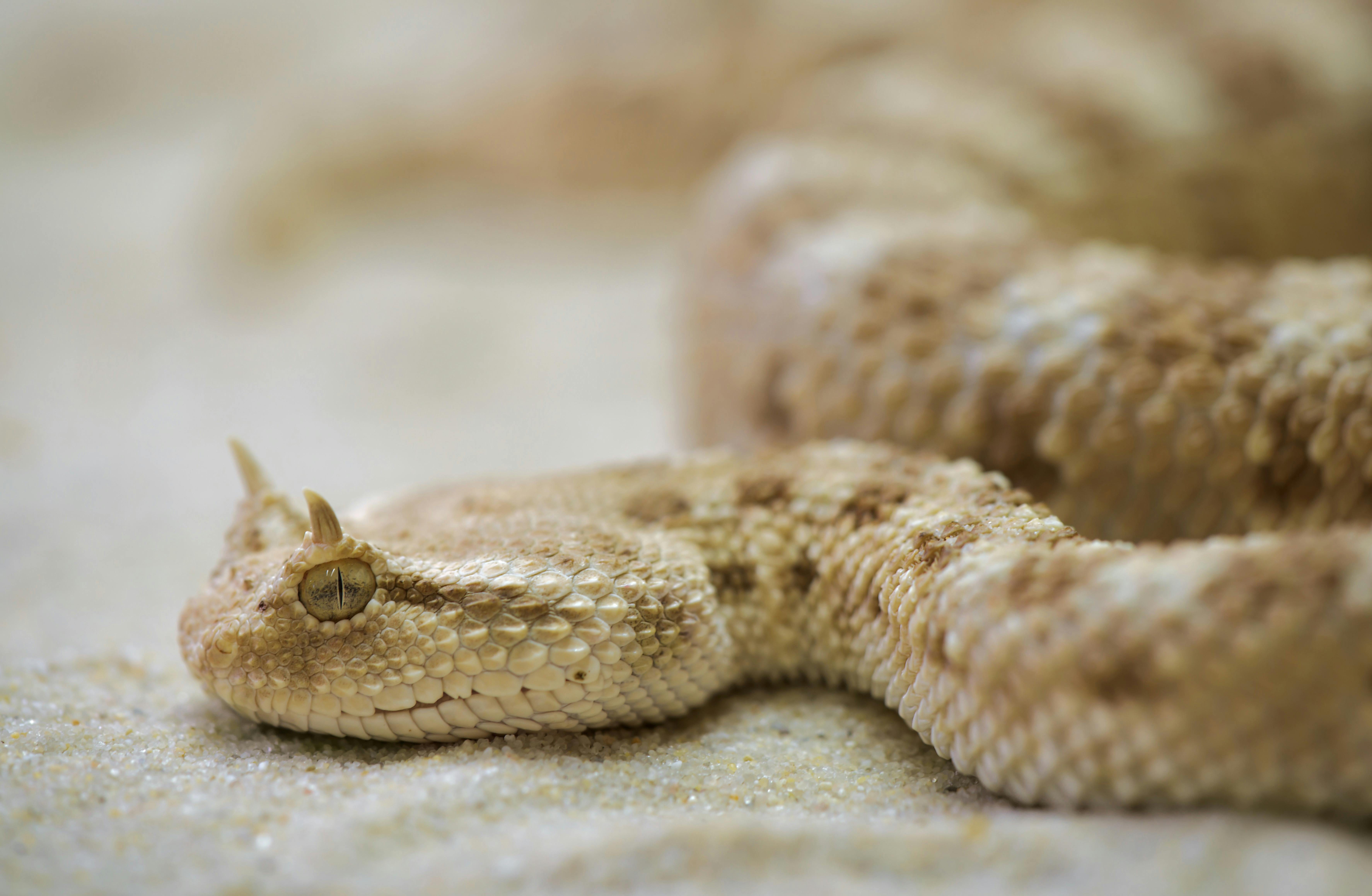
The snakes that followed were not random. The Hebrew calls them seraphim—burning ones, fiery ones—the same root as the seraphim of Isaiah 6, those six-winged creatures surrounding the throne of God, crying Holy, holy, holy. Whether the name refers to their venom, their color, or something more supernatural is debated, but the word choice is not accidental. The judgment was real, and it burned.
Many people died.
The despair that turns even genuine provision into something to resent is not weakness; it is what long, hard roads do to people. The text does not condemn the discouragement. It names it truthfully before it shows what comes next.
Journaling/Prayer: Has there been a detour in your own life—a season where the way went backward, away from where you were supposed to be—that has left your soul short and worn?
God did not withdraw provision because it was received with contempt. What He did was open a way through, and that way is what the next verses show.
2. The Bronze Serpent
Numbers 21:7-9
7 The people came to Moses, and said, “We have sinned, because we have spoken against Yahweh and against you. Pray to Yahweh, that he take away the serpents from us.” Moses prayed for the people.
8 Yahweh said to Moses, “Make a venomous snake, and set it on a pole. It shall happen that everyone who is bitten, when he sees it, shall live.” 9 Moses made a serpent of bronze, and set it on the pole. If a serpent had bitten any man, when he looked at the serpent of bronze, he lived.
The people confess. They say the right thing: we have sinned, we spoke against God and against you. Moses prays for them, as he has always prayed for them.
But notice what God does not do. He does not remove the snakes.
He tells Moses to make a bronze serpent—an image of the very thing killing them—and lift it up on a pole. And then the instruction: anyone who has been bitten, when he looks at it, will live.
The paradox is deliberate and precise. The thing causing death becomes the instrument of healing. The serpent lifted up, the serpent looked upon, is the serpent that saves. But there is nothing magical about the bronze. The material is inert. What matters is the looking—a simple, deliberate act of faith in response to God’s word. Those who refused to look at it, who perhaps judged the whole thing foolish or degrading, died of their bites. Those who looked, however bitten, however far gone—lived.
The provision was strange. The act of faith was small. The result was life.
Jesus reaches back to this moment in John 3:14-15 and places it at the center of his explanation of the gospel: “As Moses lifted up the serpent in the wilderness, so must the Son of Man be lifted up, that whoever believes in him may have eternal life.” The parallel is not a loose analogy. It is an intentional structure. The Son of Man lifted up on the cross—taking onto himself the thing that was killing us—becomes the object of saving faith. Looking to him, as strange and insufficient as the act seems, is what saves.
Whoever believes in him—however far gone, however deeply bitten—lives.
What appeared to be the source of death, lifted up, became the source of life. This is a typological foreshadowing of the gospel—a pattern centuries later fulfilled in Christ.
Journaling/Prayer: Is there something in your life that you’ve been told to look at—your sin, your need, the cross itself—that feels like a strange or insufficient thing to stake your hope on?
Faith does not require understanding all the mechanics. It requires directing your eyes toward what God has provided—even when it seems too simple, too strange, too small. Look at the One who was lifted up. That is enough.
3. Breakthrough
Numbers 21:21-24, 33-35
21 Israel sent messengers to Sihon king of the Amorites, saying, 22 “Let me pass through your land. We will not turn away into field or vineyard. We will not drink of the water of the wells. We will go by the king’s highway, until we have passed your border.”
23 Sihon would not allow Israel to pass through his border, but Sihon gathered all his people together, and went out against Israel into the wilderness, and came to Jahaz. He fought against Israel. 24 Israel struck him with the edge of the sword, and possessed his land from the Arnon to the Jabbok, even to the children of Ammon; for the border of the children of Ammon was fortified.
33 They turned and went up by the way of Bashan. Og the king of Bashan went out against them, he and all his people, to battle at Edrei.
34 Yahweh said to Moses, “Don’t fear him, for I have delivered him into your hand, with all his people, and his land. You shall do to him as you did to Sihon king of the Amorites, who lived at Heshbon.”
35 So they struck him, with his sons and all his people, until there were no survivors; and they possessed his land.
Israel sent the same diplomatic request to Sihon that they had sent to Edom: let us pass through on the main road, taking nothing, disturbing no one. Edom had refused and Israel had gone around. Sihon refused and came out to fight.
And this time, Israel fought back. And won.
Then Og king of Bashan—who appears later in Deuteronomy as a figure of near-mythic size—came out against them. God spoke to Moses before the battle: “Don’t fear him.” The same pattern, the same victory. They possessed his land.
This is the first military breakthrough for this generation. The old generation had stood at the border of Canaan forty years ago, heard the report of the spies, and refused to go in because the enemies were too large. The new generation, when an enemy came out to meet them, was not frozen by fear. What the first generation refused to enter, the second generation was beginning to take.
The victory itinerary in 21:10-20—the list of campsite names, the wells dug, the song the people sang at Beer (“spring up, O well”)—is worth noting even though we read it in summary. This is a people in motion. A people who sing at wells, who mark their progress, who have a song for water in the desert. The complaints of chapter 11 are not gone, but they are not the only note being played. Something is changing.
The exhausted, discouraged people who had been wandering for a generation were now moving toward something real.
You may have been in your own wilderness longer than you expected. The detours have been real. The deaths—of hopes, of relationships, of the life you thought you would have—have been real. But the God who said “don’t fear him” to Moses said it because the victory was already His. The new generation’s breakthrough did not depend on their own strength. It depended on the One who had already promised the land. That has not changed.
Journaling/Prayer: Is there an enemy you’ve been avoiding—a fear, a battle, a next step—because the first attempt failed, or because someone else’s failure left you believing you couldn’t win?
The second generation did not have a better military strategy than the first. They had the same God, and they walked forward instead of turning back. Sometimes that is the whole difference. Don’t measure your chances by the generation that faltered. Measure them by the God who says, “I have delivered him into your hand.”
Summary
The hinge turns here.
A discouraged, snake-bitten people looked up at a bronze serpent on a pole and lived. Then they moved, and two kings who had turned them away or come out to destroy them were defeated instead, and the land began to fall.
The bronze serpent is the theological center of this chapter—and Jesus places it at the center of the gospel. The strange provision, the simple act of looking, the life that came not from fighting the venom but from fixing the eyes on what God had lifted up: this is the shape of salvation, drawn in the wilderness centuries before the cross. The Son of Man would be lifted up. Whoever looks to him lives.
And the military victories that close the chapter are not incidental. They are the evidence that the same God who provided the serpent also goes before His people into battle—and that a generation willing to walk forward by faith will find things the previous generation left behind.
Whatever detour you are on, whatever venom is working through you, whatever battle has been stalling at the border—look up. The One who was lifted up is still the provision.
Action / Attitude for Today
If you are bitten—if something is working through you that you can’t stop on your own: the grief, the fear, the addiction, the despair, the slow dying of hope—you do not have to fix it first. You do not have to understand the mechanics of how looking at a crucified Savior undoes what is killing you. You only have to look.
Fix your eyes on the One who was lifted up. That is the whole instruction. It was enough in the wilderness. It is enough now.
If you are standing at a border, hesitating because someone else failed to cross—remember that the second generation fought the same enemies with the same God and came out with the land. The God who said “Don’t fear him” to Moses is saying it to you as well. Take the next step.
If you cannot do either of those things today—if you are too far gone even to look up—then take only this: God did not remove the snakes. He provided an answer to the snakes. He is not in the business of eliminating every hard thing before you can approach him. He is in the business of lifting something up in the middle of the hard thing, so that the hard thing no longer has the final word.
Say this prayer, as much of it as is true for you today: “Lord, I am more bitten than I want to admit. The venom has been working a long time—the despair, the disappointment, the long detour I never expected. I don’t fully understand how looking to You undoes it. But You said look, and I am looking. Lift me out of this wilderness not by removing the hard things but by being what You have always been: the answer in the middle of them. I look to the One You lifted up. Let that be enough. Amen.”
The bronze serpent was strange medicine. So is the cross. But everyone who looked, lived—and that is the only testimony that matters.

The Bible for the Broken is published by Aurion Press LLC. © Aurion Press LLC. All rights reserved.