
Day 17 – Promise and Perseverance
From Doubt to Declaration
However you can engage today, we’re here. Read, listen or both.
The written portion gives an overview, with verses broken down into smaller bites, and journaling/prayer prompts for reflection. In the podcast, Steve Traylor reflects on today’s passage with Scripture reading, a deeper pastoral teaching, and prayer (about 15 minutes). Perfect for morning coffee, commutes, or when your eyes need a rest.
Genesis 15:1-21
Step into this day with open hands and an honest heart.
Abram has just returned from battle. He has just refused wealth.
And now he stands alone—aging, childless, wondering if God’s promises were just beautiful words that will never take form.
If you’ve ever felt God’s promises slip through your fingers like sand, you’re not alone. If you’ve ever wondered whether God really meant what He said, Abram stood in that same place.
Today we see how God responds to doubt—not with anger, but with a covenant sealed in blood.
1. Fear and Faithfulness
Genesis 15:1-6
¹ After these things the LORD’s word came to Abram in a vision, saying, “Don’t be afraid, Abram. I am your shield, your exceedingly great reward.”
² Abram said, “Lord GOD, what will you give me, since I go childless, and he who will inherit my estate is Eliezer of Damascus?” ³ Abram said, “Behold, you have given no children to me: and, behold, one born in my house is my heir.”
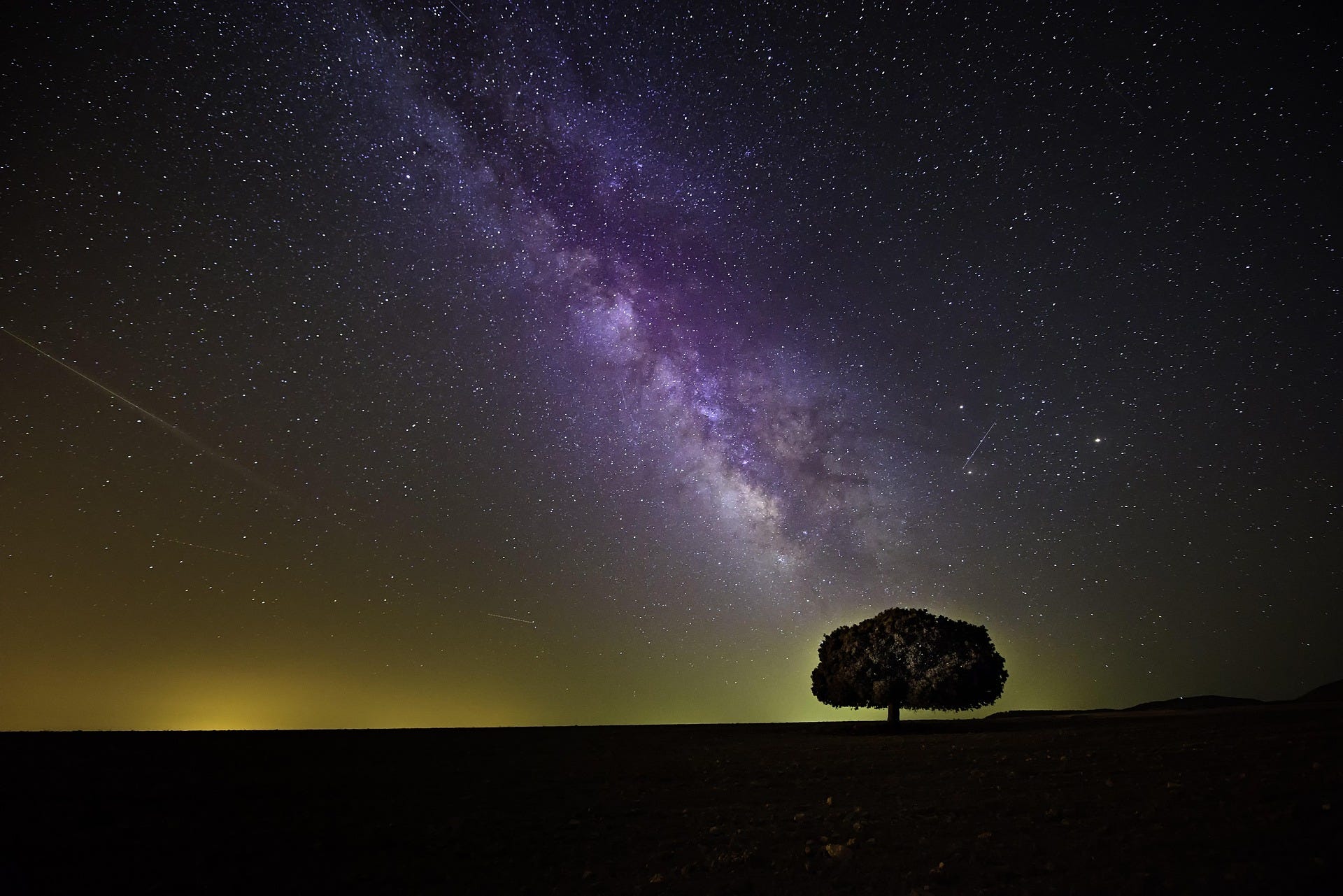
⁴ Behold, the LORD’s word came to him, saying, “This man will not be your heir, but he who will come out of your own body will be your heir.” ⁵ The LORD brought him outside, and said, “Look now toward the sky, and count the stars, if you are able to count them.” He said to Abram, “So your offspring will be.”
⁶ He believed in the LORD, and he credited it to him for righteousness.
God speaks first: “Don’t be afraid.”
He knows Abram’s heart before Abram speaks. He sees the doubt, the weariness, the ache of unfulfilled longing.
And Abram responds—not with polite faith, but with raw honesty.
“What will You give me? I’m still childless.”
This is not rebellion. This is the cry of someone who has been waiting, trusting, and watching the years pass by.
God does not rebuke him. Instead, He takes him outside and shows him the stars.
“Count them, if you can. That’s how many descendants you will have.”
And Abram believed.
Not because he felt certain. Not because he understood how it could happen. But because God said it.
And God credited that trust as righteousness.
This is one of the most important verses in all of Scripture.
The apostle Paul will later point to this exact moment and say: this is how everyone is saved—not by works, but by faith alone (Romans 4:3, Galatians 3:6).
Abram was not yet circumcised. He had no law to obey. He had no religious ritual to complete.
He simply believed God’s promise—and God declared him righteous on that basis alone.
This is the gospel in seed form.
Journaling/Prayer: Where are you waiting for God’s promise to come true? What has He said that feels impossible from where you stand? Can you tell Him honestly—like Abram did—”I don’t see how this can happen”?
God does not condemn honest questions. He invites them.
If you’re struggling to believe today, tell Him that. Say: “I want to trust You. Help my unbelief.”
That prayer—that vulnerable admission—is itself an act of faith.
2. Covenant and Certainty
Genesis 15:7-11
⁷ He said to Abram, “I am the LORD who brought you out of Ur of the Chaldees, to give you this land to inherit it.”
⁸ He said, “Lord GOD, how will I know that I will inherit it?”
⁹ He said to him, “Bring me a heifer three years old, a female goat three years old, a ram three years old, a turtledove, and a young pigeon.” ¹⁰ He brought him all these, and divided them in the middle, and laid each half opposite the other; but he didn’t divide the birds. ¹¹ The birds of prey came down on the carcasses, and Abram drove them away.
Abram asks again: “How will I know?”
Even after the promise under the stars, he wants assurance. He wants something more than words—something tangible.
And God does not say, “Abram, I already told you. Isn’t that enough?”
Instead, He gives Abram a covenant ceremony—the most binding agreement possible in the ancient world.
God instructs Abram to prepare animals for sacrifice and cut them in half.
This was the ritual of covenant-making: the two parties would walk between the pieces, essentially saying, “If I break this covenant, may I become like these animals—torn apart.”
It was a blood oath. A promise sealed with the threat of death.
But notice what happens next.
Journaling/Prayer: When have you asked God for more assurance, more proof, more clarity? How did He respond? If you’re waiting for certainty before you trust, tell Him that today.
God does not shame us for needing reassurance. He meets us in our weakness and gives what we need to keep believing.
3. Sleep and Sovereignty
Genesis 15:12-16
¹² When the sun was going down, a deep sleep fell on Abram. Now terror and great darkness fell on him. ¹³ He said to Abram, “Know for sure that your offspring will live as foreigners in a land that is not theirs, and will serve them. They will afflict them four hundred years. ¹⁴ I will also judge that nation, whom they will serve. Afterward they will come out with great wealth; ¹⁵ but you will go to your fathers in peace. You will be buried at a good old age. ¹⁶ In the fourth generation they will come here again, for the iniquity of the Amorite is not yet full.”
A deep sleep falls on Abram. Not a peaceful rest—a terrifying darkness.
The Hebrew phrase suggests overwhelming dread—the kind of fear that comes from standing in the presence of the holy God or seeing the weight of future suffering.
This is not the comfortable presence of a friend. This is the awesome, fearful presence of the Almighty.
God does not always make us comfortable when He reveals truth. Sometimes His nearness is overwhelming.
And in that darkness, God speaks.
He tells Abram the hard truth: the promise will not come quickly or easily.
Your descendants will be enslaved. They will suffer. They will wait four hundred years.
But—and this is crucial—God will judge the oppressors. God will bring His people out. God will fulfill what He has promised.
And Abram? He will die in peace, at a good old age, before the hardest parts unfold.
Notice God’s justice here: He will not judge the Amorites until “their iniquity is full.”
God does not act arbitrarily. He gives time for repentance. He waits until sin reaches its full measure.
And when He does judge, it will be righteous and deserved.
Even in the hardest parts of this prophecy, God’s character shines through: He is both patient and just.
God does not hide the difficulty. He does not sugarcoat the suffering. But He does promise that His purposes will prevail.
Journaling/Prayer: What hard truth has God revealed to you about the road ahead? What suffering or delay has He allowed you to see? Can you trust that He will fulfill His promises—even if you don’t see the fullness in your lifetime?
Sometimes God’s faithfulness looks like this: He tells us the truth. He prepares us for hardship. He assures us that His plan will not fail—even if we don’t see the completion ourselves.
If you’re in a season of waiting, this passage says: your wait is not wasted. God is at work, even in the delay.
4. Fire and Fulfillment
Genesis 15:17-21
¹⁷ It came to pass that, when the sun went down, and it was dark, behold, a smoking furnace and a flaming torch passed between these pieces. ¹⁸ In that day the LORD made a covenant with Abram, saying, “I have given this land to your offspring, from the river of Egypt to the great river, the river Euphrates: ¹⁹ the land of the Kenites, the Kenizzites, the Kadmonites, ²⁰ the Hittites, the Perizzites, the Rephaim, ²¹ the Amorites, the Canaanites, the Girgashites, and the Jebusites.”
When it is fully dark, something extraordinary happens.
A smoking furnace and a flaming torch—manifestations of God’s very presence—pass between the pieces of the sacrifice.
This is no mere symbol. This is God Himself moving through the covenant path.
Throughout Scripture, fire and smoke mark God’s presence:
The burning bush (Exodus 3)
The pillar of fire (Exodus 13)
Mount Sinai (Exodus 19)
Here, God makes Himself visible so Abram can see with his own eyes: God is binding Himself to this covenant.
But Abram does not walk through.
In a normal covenant ceremony, both parties would pass between the animals, binding themselves to the agreement.
But here, only God moves.
This is a unilateral covenant. God is binding Himself—and Himself alone—to keep this promise.
Abram does not have to perform. He does not have to earn it. He does not have to be strong enough or faithful enough.
God says: “I will do this. And if I fail, may I be torn apart like these animals.”
But God cannot fail. So the promise is certain.
Journaling/Prayer: Where are you striving to keep God’s promises for Him? Where are you afraid that if you don’t hold on tightly enough, His plans will fall apart? What would it mean to let God carry the weight of His own covenant?
God does not ask you to hold His promises together. He holds you.
If you’re weary from striving, from trying to make things happen, from feeling like you have to be strong enough to keep God’s plans alive—you can stop.
God’s promises depend on God’s faithfulness, not yours.
This does not mean faith is passive.
Abram still had to get up the next day and keep walking with God. He still had to make choices. He still had moments of doubt and failure ahead.
But his security was never based on the strength of his grip. It was based on the strength of God’s grip on him.
True faith perseveres—not because we are strong, but because God is faithful to complete what He begins (Philippians 1:6).
Summary
Today we saw Abram wrestle with doubt. We saw him ask honest questions. We saw him struggle to believe.
And we saw God respond—not with condemnation, but with a covenant.
God did not wait for Abram to have perfect faith before He acted. He acted first, binding Himself to keep His Word.
This is grace: God takes the burden of the covenant on Himself.
You do not have to be strong enough. You do not have to believe perfectly. You do not have to hold on tightly enough.
God will keep His promises—because He is faithful, even when we are not.
Action / Attitude for Today
As you move through your day, carry this truth with you: God’s promises depend on God’s faithfulness, not yours.
If you’re struggling to believe something God has said, tell Him honestly. Like Abram, you can say: “How will I know? I don’t see how this is possible.”
God does not shame honest doubt. He meets it with assurance.
Choose today to bring one doubt, one fear, one “how will I know?” question to God.
Not because you have to believe perfectly before He will act. But because He invites your honesty—and He will meet you there with grace.
And if today you cannot even voice the question—if you’re too numb, too tired, too hurt—then simply know this:
Abram was declared righteous because he believed God’s promise.
Today, God’s promise is fulfilled in Christ. To believe God’s Word now is to believe what He says about Jesus—that Christ (God in the flesh) died for our sins and rose again.
If you have believed this, God has bound Himself to you. His covenant does not depend on your strength. It depends on His.
And He will not fail.
The Bible for the Broken is published by Aurion Press LLC. © Aurion Press LLC. All rights reserved.