
Day 91—Locusts and Light
When Darkness You Can Feel Still Has a Boundary
However you can engage today, we’re here. Read, listen or both.
The written portion gives an overview, with verses broken down into smaller bites, and journaling/prayer prompts for reflection. In the podcast, Steve Traylor reflects on today’s passage with Scripture reading, a deeper pastoral teaching, and prayer (about 15 minutes). Perfect for morning coffee, commutes, or when your eyes need a rest.
📖 Resources: Printable Bible Book Guides (Genesis & Job) · Through the Wilderness: A Lenten Prayer Guide · Hard Questions, Honest Answers
Exodus 10
Breathe for a moment before you read today.
We are near the end of something. Nine plagues have swept through Egypt. The land is stripped. The economy is broken. Pharaoh’s own servants have turned against him, begging him to let Israel go before there is nothing left. Egypt has been undone by blood, by frogs, by lice, by flies, by disease, by boils, by hail. And still—still—Pharaoh holds on.
Two plagues remain before the night that will change everything. Both of them arrive in Exodus 10. One devours what the hail left standing. The other removes light itself.
But God’s purpose in these plagues is not only destruction. He tells Moses plainly: I have done this so that you may tell your children and your children’s children—that you may know that I am the LORD. You are reading Exodus now, thousands of years later, because He intended this story to keep speaking.
Today we see that God’s acts in history are never only for the moment in which they happen—and that even darkness which can be physically felt does not extinguish the light He keeps burning.
1. Pride and Pressure
Exodus 10:1-11
Yahweh said to Moses, “Go in to Pharaoh, for I have hardened his heart and the heart of his servants, that I may show these my signs among them; 2 and that you may tell in the hearing of your son, and of your son’s son, what things I have done to Egypt, and my signs which I have done among them; that you may know that I am Yahweh.”
3 Moses and Aaron went in to Pharaoh, and said to him, “This is what Yahweh, the God of the Hebrews, says: ‘How long will you refuse to humble yourself before me? Let my people go, that they may serve me. 4 Or else, if you refuse to let my people go, behold, tomorrow I will bring locusts into your country, 5 and they shall cover the surface of the earth, so that one won’t be able to see the earth. They shall eat the residue of that which has escaped, which remains to you from the hail, and shall eat every tree which grows for you out of the field. 6 Your houses shall be filled, and the houses of all your servants, and the houses of all the Egyptians, as neither your fathers nor your fathers’ fathers have seen, since the day that they were on the earth to this day.’” He turned, and went out from Pharaoh.
7 Pharaoh’s servants said to him, “How long will this man be a snare to us? Let the men go, that they may serve Yahweh, their God. Don’t you yet know that Egypt is destroyed?”
8 Moses and Aaron were brought again to Pharaoh, and he said to them, “Go, serve Yahweh your God; but who are those who will go?”
9 Moses said, “We will go with our young and with our old. We will go with our sons and with our daughters, with our flocks and with our herds; for we must hold a feast to Yahweh.”
10 He said to them, “Yahweh be with you if I let you go with your little ones! See, evil is clearly before your faces. 11 Not so! Go now you who are men, and serve Yahweh; for that is what you desire!” Then they were driven out from Pharaoh’s presence.
The question God sends through Moses is not a theological puzzle—it is a direct confrontation: How long will you refuse to humble yourself before me? Eight plagues into this contest, and God names the real issue plainly. This was never about strategy or stubbornness in the ordinary sense. This was about pride—Pharaoh’s refusal to place himself below the God of the Hebrews, to occupy the position of a creature before its Creator.
Notice what changed in verse 7. Pharaoh’s own servants have broken with him. They have watched Egypt be ruined—livestock dead, bodies covered in boils, crops shattered by hail—and they are no longer willing to hold the line with their master. Egypt is destroyed, they say. Their counsel is not repentance; it is pragmatism. But even pragmatism can see what Pharaoh will not.
Pharaoh negotiates. He always negotiates. He agrees to let the men go but demands the children and flocks stay behind. Moses refuses entirely, and Pharaoh has them thrown out. It is the same pattern that has run through every confrontation: yield a partial concession, keep some leverage, avoid full surrender. The something he would never yield was his own position—above Israel, above Moses, above the God of the Hebrews.
Journaling/Prayer: Is there an area where you have been negotiating with God—willing to give some things but holding tightly to one particular thing?
If this is too close to the bone today, simply name it to God—even one word is enough. He already knows what you are holding. Naming it honestly is where the release begins.
2. The Land Devoured
Exodus 10:12-15
12 Yahweh said to Moses, “Stretch out your hand over the land of Egypt for the locusts, that they may come up on the land of Egypt, and eat every herb of the land, even all that the hail has left.” 13 Moses stretched out his rod over the land of Egypt, and Yahweh brought an east wind on the land all that day, and all night; and when it was morning, the east wind brought the locusts. 14 The locusts went up over all the land of Egypt, and rested in all the borders of Egypt. They were very grievous. Before them there were no such locusts as they, nor will there ever be again. 15 For they covered the surface of the whole earth, so that the land was darkened, and they ate every herb of the land, and all the fruit of the trees which the hail had left. There remained nothing green, either tree or herb of the field, through all the land of Egypt.
The east wind blew all day and all night. By morning, locusts covered the land—so many that the ground itself was hidden. What the hail had spared, the locusts consumed. Not a green thing remained anywhere in Egypt.
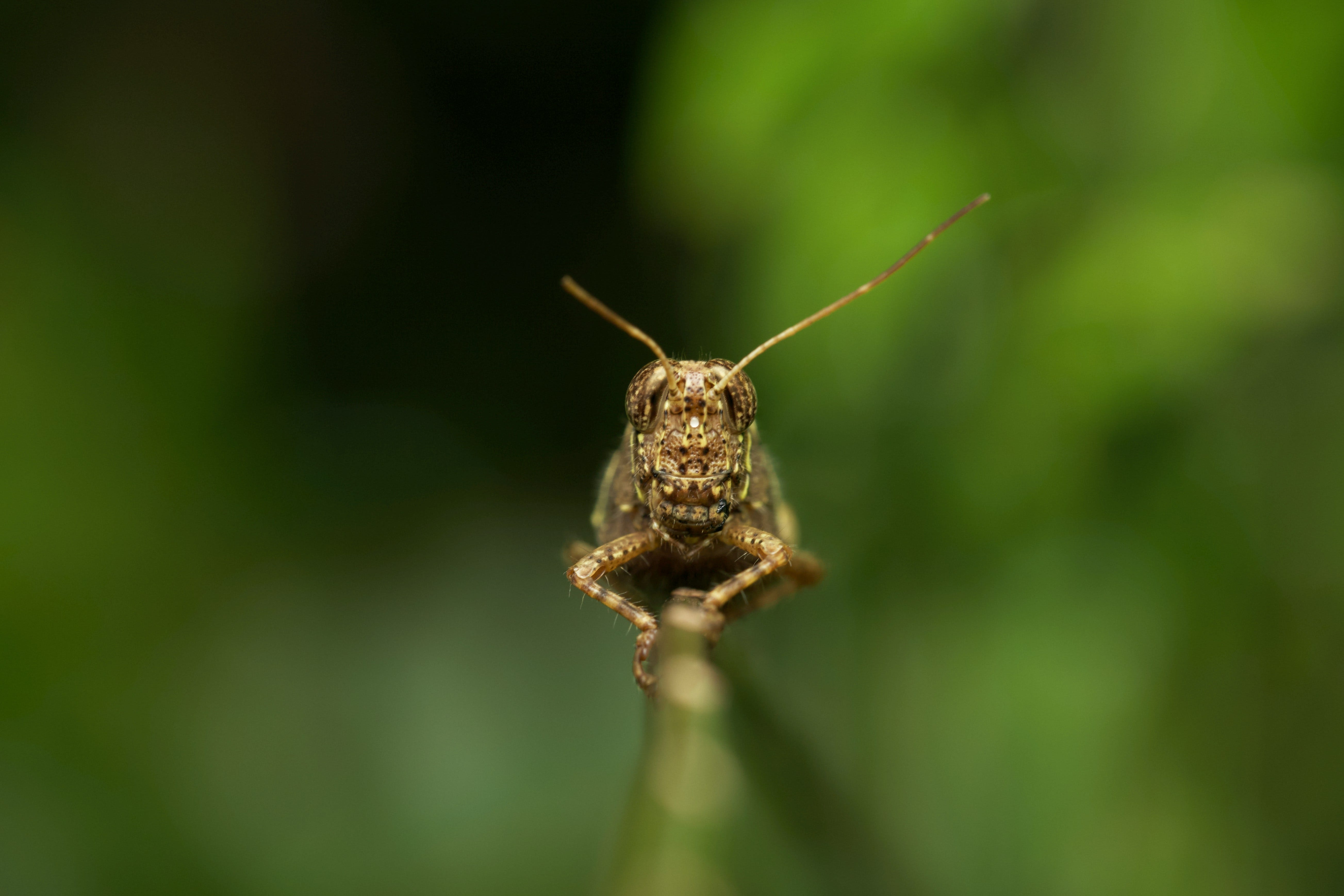
God used what He already made—the wind, the insects, the natural world—to accomplish what no army could. The eighth plague was a locust swarm. It was also a declaration that the Creator of the natural world had not surrendered its governance to anyone else.
Journaling/Prayer: When the things you depend on are stripped away—health, income, relationships, the future you planned—what remains?
If you are in a season of loss, this passage is not meant to increase your despair. God’s power is not diminished when ours is. He governs the wind. What He strips He can restore—and what He chooses to restore, He restores completely.
3. Confession and Removal
Exodus 10:16-20
16 Then Pharaoh called for Moses and Aaron in haste, and he said, “I have sinned against Yahweh your God, and against you. 17 Now therefore please forgive my sin again, and pray to Yahweh your God, that he may also take away from me this death.”
18 Moses went out from Pharaoh, and prayed to Yahweh. 19 Yahweh sent an exceedingly strong west wind, which took up the locusts, and drove them into the Red Sea. There remained not one locust in all the borders of Egypt. 20 But Yahweh hardened Pharaoh’s heart, and he didn’t let the children of Israel go.
Pharaoh confesses again. I have sinned. Forgive me. Remove this. For the third time in the plague narrative, he produces accurate theological statements under pressure. He says them in haste—the locusts have made the situation unmanageable, and he needs them gone.
Moses prays for him anyway. He goes out and prays. The west wind comes, and the locusts are removed—completely, not diminished. Not one locust remained in all the border of Egypt.
God answered the prayer of a righteous man on behalf of an unrighteous one. Moses could have refused. God could have withheld. Instead, even knowing what Pharaoh was, God removed the locusts in full. This is not a promise that God will always grant relief to those who stay hard-hearted—the consequences will grow from here, not shrink. But it is a window onto something true: God hears intercession offered in faith on behalf of those who do not yet have faith themselves.
Journaling/Prayer: Is there someone in your life whose repeated pattern makes you reluctant to pray for them?
Moses prayed for Pharaoh without waiting for signs of change. You don’t have to feel like praying to pray. Bring the name, ask God to move, and leave the response with Him.
4. Darkness You Can Feel
Exodus 10:21-23
21 Yahweh said to Moses, “Stretch out your hand toward the sky, that there may be darkness over the land of Egypt, even darkness which may be felt.” 22 Moses stretched out his hand toward the sky, and there was a thick darkness in all the land of Egypt for three days. 23 They didn’t see one another, and nobody rose from his place for three days; but all the children of Israel had light in their dwellings.
No warning was given. The ninth plague arrived without announcement—God told Moses to stretch out his hand, and the sky went dark.
Not dim. Not clouded. The Hebrew phrase v’yamesh khoshekh means darkness that is grasped, felt, physically sensed—a darkness so complete that no one could see another person or move from their place for three days.
And then, in a single sentence that changes everything: all the children of Israel had light in their dwellings.
Not because they found better lamps. The same darkness that immobilized an empire did not touch them. This is not a promise that God’s people are exempt from all darkness—the Bible does not teach that. But it is a statement about what kind of God He is: the One who made light from nothing can still make a distinction between darkness and light, in the same place, at the same time.
Journaling/Prayer: Is there a darkness you are in right now that feels—not just metaphorically, but almost physically—like something you cannot push through?
If you are not in a dark season, offer this as intercession for someone who is. If you cannot find words, bring what you have. God knows where the darkness is.
5. The Last Negotiation
Exodus 10:24-29
24 Pharaoh called to Moses, and said, “Go, serve Yahweh. Only let your flocks and your herds stay behind. Let your little ones also go with you.”
25 Moses said, “You must also give into our hand sacrifices and burnt offerings, that we may sacrifice to Yahweh our God. 26 Our livestock also shall go with us. Not a hoof shall be left behind, for of it we must take to serve Yahweh our God; and we don’t know with what we must serve Yahweh, until we come there.”
27 But Yahweh hardened Pharaoh’s heart, and he wouldn’t let them go. 28 Pharaoh said to him, “Get away from me! Be careful to see my face no more; for in the day you see my face you shall die!”
29 Moses said, “You have spoken well. I will see your face again no more.”
After three days of palpable darkness, Pharaoh conceded one more step. He would let the children go now—families intact—but the livestock must remain. It was still negotiation, still an attempt to keep some leverage. And Moses refused, for a reason worth paying attention to: We don’t know with what we must serve the LORD until we arrive there.
This is honest—and uncomfortable. Following God means you cannot predetermine what it will cost. Jesus says as much in Luke 14:28-30: count the cost before you build. But the full weight of His teaching is not permission to wait until you can afford it. Count carefully, and discover that the cost is total. You bring the whole herd because you don’t yet know which part He will need.
Moses would not leave the livestock behind because he didn’t know yet what worship would require. That is true. But underneath it is something larger: when you go with God, you go with everything, because He may need any of it—and you will not know in advance which part. Half-surrender is not surrender. Keeping the flocks as insurance is still keeping something back.
Journaling/Prayer: What have you held back from God because you were not sure you could afford to give it?
Name what it is—even if only to yourself. The hardest part of this teaching is not understanding it. It is the moment of actually opening the hand.
Pharaoh snapped. Three days of felt darkness, and Moses still stood there refusing to negotiate. Pharaoh threatened his life and expelled him. Moses accepted the terms plainly: I will see your face no more. He was not afraid. He was not demoralized. He stated the fact and left.
There are moments when the conversation ends—not through failure, but because what needed to be said has been said. Moses did not need Pharaoh’s cooperation. He never did.
Summary
Two plagues. The land stripped bare by locusts. The sky sealed shut for three days by darkness you could feel. And through all of it: Israel had light. Pharaoh had only darkness and ruin, and a confession that dissolved the moment God answered it.
God’s acts in history carry a testimony purpose. These plagues were preserved so that future generations would know who He is—and you are reading Exodus now because He intended this story to keep speaking.
There is also a difference between acknowledging consequences and actually changing. Pharaoh’s confessions were accurate and empty. The pattern is not unique to Pharaoh.
And then, most tenderly: God keeps light burning where He has placed His people, even when the surrounding darkness can be physically felt. The light in Israel’s dwellings was not a reward. It was simply what He does.
The darkness you are in, however thick and however long, does not mean God has abandoned His people. He knows where you are. He keeps that burning.
Action/Attitude for Today
Hold this as you move through the day: God makes a distinction. His people are not abandoned in the dark.
If you have very little today, take verse 23 with you: All the children of Israel had light in their dwellings. You don’t have to understand the darkness to trust the One who puts boundaries on it. Simply notice—today—one small evidence of light. A meal. A breath. A moment that didn’t crush you. Name it, silently or aloud, as His.
If you can do a little more: bring to God whatever you have been holding back—the thing you named in Section 1 or Section 5. Not to perform surrender, but to begin it. Say aloud or in writing: “This is what I have been keeping. I’m not sure I can let it go yet. But I’m naming it to You.” That naming is not nothing. It is the beginning of open hands.
If you want to go further still: pray for someone whose repentance you doubt—the way Moses prayed for Pharaoh. Don’t wait until you feel like it. Simply bring their name before God and ask Him to do what only He can. Then let it go. You are not responsible for their response; you are responsible for the prayer.
Father, I don’t always know what You are doing in the darkness around me. I can’t always tell the difference between discipline and testing and simply living in a broken world. But You know where I am. You knew where Israel was in Egypt. You kept the light on. I’m asking You to keep it on in me—not because I’ve earned it, but because You are the God who makes that distinction. When I can’t see my hand in front of my face, remind me: Your people have light in their dwellings. I belong to You. Amen.

The Bible for the Broken is published by Aurion Press LLC. © Aurion Press LLC. All rights reserved.