
📖 Resources: Printable Genesis Guide · Through the Wilderness: A Lenten Prayer Guide · Hard Questions, Honest Answers · Genesis-Job: Two Stories—One Foundation
Exodus 14 is one of the most concentrated sequences of miracle language in all of Scripture. The sea parts. The army falls. The people cross on dry ground. Not one soldier remains.
If you’ve been walking through the Exodus studies, you’ve been living inside miracle territory for days—plagues, pillars of fire, manna, water from a rock. And if you are in a hard season yourself, you may have noticed a quiet, uncomfortable question forming beneath all of it:
Why don’t things like this happen now?
That question deserves a real answer—not a dismissal, and not false comfort. The theology of miracles is richer than most people realize, and understanding it can actually help those of us who are suffering and not seeing any dramatic divine intervention.
The Three Words Scripture Uses
The Old Testament uses two Hebrew words together so frequently they became almost a fixed phrase. The first is ot, meaning “sign.” The second is mopheth, meaning “wonder.” You find them paired in Exodus 7:3, Deuteronomy 4:34, Nehemiah 9:10, and dozens of other places.
These two words are not simply synonyms. Each carries a distinct emphasis.
A sign points beyond itself. Its purpose is communicative. It is not primarily about the power on display—it is about what that power is saying. When God first gave Moses miraculous power in Exodus 4, He told Moses explicitly what the sign was for: “that they may believe that Yahweh, the God of their fathers… has appeared to you.” The miracle was authorization. It was a credential—God’s visible signature on a divinely-commissioned messenger.
A wonder carries a different weight. Where sign appeals to the understanding, wonder appeals to something closer to awe. The word describes an event so far outside the ordinary that it jolts the observer into a different posture. Wonder is not just information. It is encounter.
The New Testament inherits both concepts and adds a third Greek word: dunamis, meaning mighty power or inherent ability. The phrase that appears throughout the Gospels and Acts—signs and wonders—carries the same dual weight as the Hebrew original. And when John writes about Jesus’ miracles in his Gospel, he almost exclusively uses semeion—”sign”—because he is making a deliberate theological point: every miracle Jesus performed was not merely a display of power, but a declaration of identity.
So a miracle, properly understood, is an observable event in which God directly suspends natural law without secondary means—and this event functions simultaneously as a sign pointing to a divinely commissioned word, a wonder producing awe and reorientation, and a mighty act demonstrating the power of God.
In plain terms: a miracle is when God steps directly into the world and does something that has no natural explanation whatsoever—not a timely rainstorm, not a surprising medical recovery, but something that could only have happened because God did it. And in Scripture, those events almost always come with a message attached.
The Difference Between a Miracle and Providence
This distinction is one of the most practically important in all of Christian theology, especially for those of us in hard seasons.
God’s providence is not the same as a miracle. Providence is God governing all things through secondary means—through natural processes, through human choices, through the ordinary fabric of cause and effect. He feeds us through harvests. He heals us through immune systems and medicine. He guides us through circumstances, through wisdom, through the counsel of others. Providence is constant, pervasive, and—when we really see it—astonishing. But it operates through the natural order rather than suspending it.
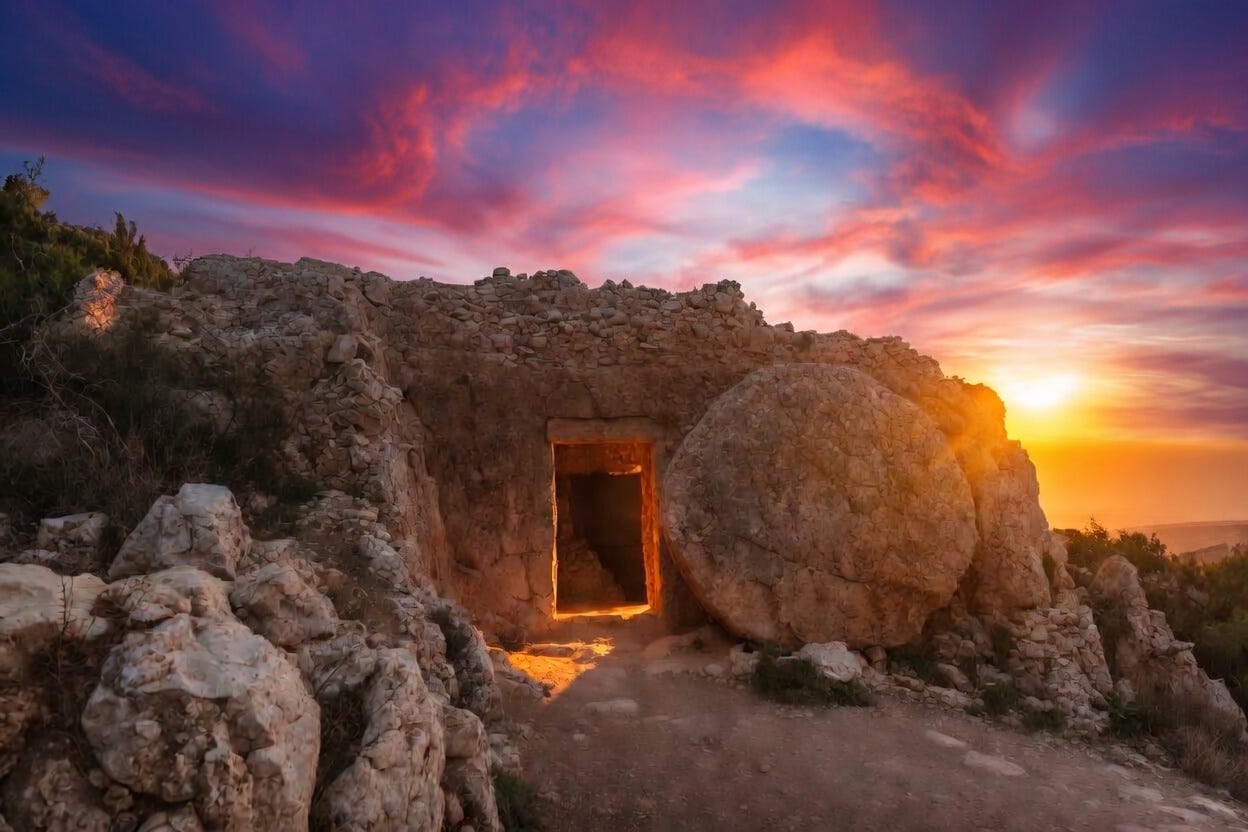
Miracle is when God sets aside secondary means entirely and acts directly. Water held back by no dam. An army stopped by no weapons. A tomb emptied by no human hand.
The reason this distinction matters for those who are suffering is this: the absence of visible miracle is not the absence of God. He is not absent when He is providential. He is governing. He is working through means that may not be dramatic but are no less real. The centuries in Scripture that contain few recorded miracles are not centuries of divine abandonment—they are centuries of divine governance that operated more quietly.
Why Miracles Cluster
Here is something students of the Bible sometimes miss: miracles are not evenly distributed across Scripture. They cluster. And the clustering is not random.
Scripture shows several major concentrations of miracles, each tied to a pivotal moment in redemptive history. The most prominent: the Exodus, under Moses and then Joshua, as God establishes Israel as a covenant people. Then the prophetic era of Elijah and Elisha, when God is contending with Baal worship and reconfirming the prophetic word in a generation that has largely abandoned it. Then the ministry of Jesus and His apostles, as the new covenant is inaugurated.
Between and around these clusters, centuries pass with fewer recorded miracles. The books of Judges, Samuel, and Kings contain remarkable stories—but they are not continuous miracle sequences. This is not an accident.
The pattern reveals the primary purpose of miracles: they function as divine authentication. They are God’s seal on a messenger or a message at a pivotal moment in redemptive history. The Exodus miracles authenticated Moses as God’s commissioned deliverer. The miracles of Elijah and Elisha authenticated the prophetic word in a hostile generation. The miracles of Jesus authenticated His identity as the Son of God. The miracles of the apostles authenticated the gospel they were proclaiming before the New Testament was written down.
This is precisely why Hebrews 2:3–4 describes the miracles of the apostolic era as God bearing witness to a message that was being delivered. The unique function those miracles served—credentialing a messenger, establishing a revelation—was fulfilled in the completed canon of Scripture. The sign was given. It stands permanently.
None of that means God has locked His own hands. He is sovereign. He acts as He chooses, when He chooses. But it does mean we are no longer in the redemptive-historical moment that required that concentrated, public, undeniable cluster of authenticating signs. The testimony has been established. What we hold in our hands is the result.
The Resurrection: The Apex of the Category
The crossing of the sea is not the final word in this category of divine act. It is a chapter in a longer story.
The resurrection of Jesus from the dead is a miracle by every definition established above. It is not providence. It is not God working through secondary means. It is God directly intervening in the natural order, setting aside the irreversible biology of death, and raising a physical body to indestructible new life. No east wind. No staff. No natural mechanism. The tomb was sealed, guarded—and then empty.
And like every miracle in this category, the resurrection functions first as a sign. In Acts 2:22, Peter declares that Jesus of Nazareth was “a man approved of God to you by mighty works and wonders and signs, which God did by him.” The resurrection is God’s final and irreversible confirmation of that approval—the sign above all signs. It is God declaring publicly: This is My Son. This word is true.
It is also a wonder—something so far outside the ordinary that no honest observer encounters it without being permanently reoriented. Paul tells the Corinthians that the resurrection is not a footnote to the gospel. It is the gospel. If Christ has not been raised, he writes, your faith is worthless and you are still in your sins. The resurrection does not merely illustrate the message of grace—it is the message, the event on which everything else depends.
And it is a dunamis—a mighty act. The same power, Paul writes in Ephesians 1, that raised Christ from the dead is at work in those who believe. Not a similar power. Not a lesser version. The same one.
What This Means for Those Who Are Waiting
If you are in a season where miracles are not visible—where God seems to be working slowly, through ordinary things, through long waiting, through means you can barely trace—you are not in a different story than Israel. You are in the same story, at a different chapter.
The great authenticating signs have been given. The Word is written. The empty tomb stands as permanent, irrefutable testimony to who God is and what He is willing to do on behalf of His people. You do not need another sea to part to know that this God is real and active.
And yet—He is not tame. He is not finished. The God who sovereignly orchestrated every detail of Exodus 14 is the same God who governs your ordinary days. He may act in ways that defy explanation. He may not. But He is never absent, never powerless, and never indifferent.
His providence is not His absence. It is His constant, tireless, governing work in a world He has not abandoned.
You are not waiting for God to show up. You are living in the care of a God who raised His Son from the dead and has not grown tired since. The same power that emptied the tomb and parted the sea is the power at work in your life today—visible or not, felt or not, traceable or not.
That is enough to hold onto.
A final note: this article uses "miracle" in its precise theological sense to provide perspective for those who wonder why God doesn't seem to be parting any seas on their behalf. But if God has done something in your life that you have no other word for—something that still makes you shake your head and say, "that was Him"—you don't need anyone’s permission to call it what it was. He moves. He intervenes. He shows up for His people in ways that defy explanation. If you've experienced such interventions, treasure them.
This article draws from the Day 95 study in Exodus 14. If you want to sit with the story itself—the impossible campsite, Israel's fear, the pillar moving to guard from behind, the dry ground under panicked feet—the written study walks through all of it.
The Bible for the Broken is published by Aurion Press LLC. © Aurion Press LLC. All rights reserved.