
Day 180—The Walls
When God Wins Without a Strategy
However you can engage today, we’re here. Read, listen or both.
The written portion gives an overview, with verses broken down into smaller bites, and journaling/prayer prompts for reflection. In the podcast, Steve Traylor reflects on today’s passage with Scripture reading, a deeper pastoral teaching, and prayer (about 15 minutes). Perfect for morning coffee, commutes, or when your eyes need a rest.
📚 Resource Library:
Printable Bible Book Guides: Discipleship charts for books we’ve completed together
Hard Questions, Honest Answers: Deeper dives on difficult topics that arise along the way
JOSHUA RESOURCE: A map of the Joshua campaigns and a reference outline is available here.
A note on today's structure: Joshua 6 weaves several distinct threads through the same verses—the march, the miracle, Rahab's rescue, and the cherem warning. Today's sections follow the narrative's own dramatic logic rather than strict verse order, so that each section has a single clear focus. All 27 verses are covered.
Joshua 6
Walk slowly into this one.
You are standing outside Jericho. The city is locked—not a gate unbarred, not a soldier in the field. The whole population has pulled inward, every door shut, waiting for what they’ve heard is coming. They know Israel is here. They know what happened at the Red Sea. They know what happened to Sihon and Og. Rahab told the spies exactly what the city knew: “your terror has fallen on us” (Joshua 2:9).
And Joshua’s military briefing from God is this: walk around it. Silently. For six days. Seven priests, seven rams’ horns, the ark of the covenant—and the rest of the army, saying nothing.
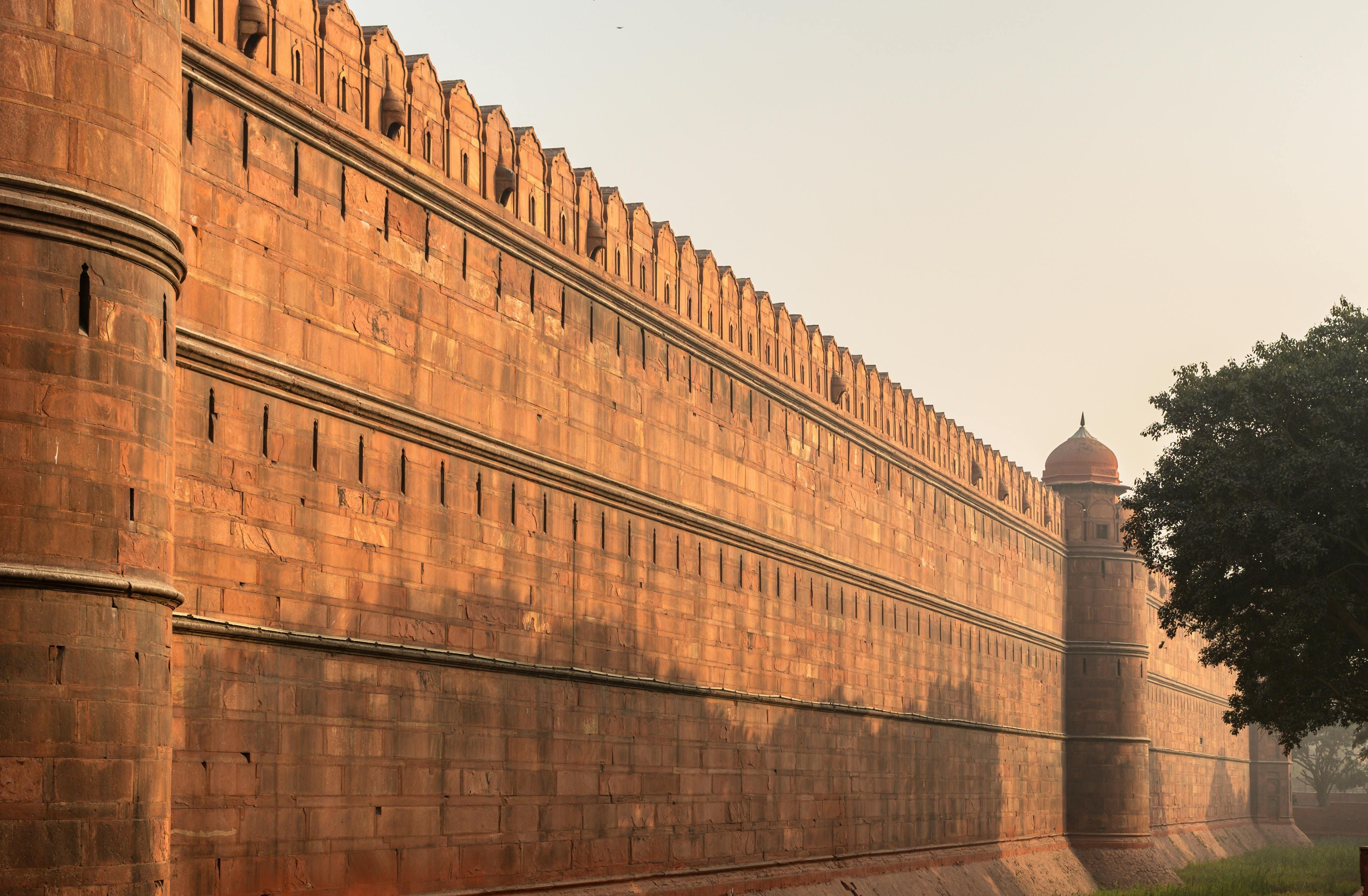
No siege towers. No battering rams. No strategy that any general in the ancient world would recognize as warfare. Just a slow circuit around stone walls, once a day, every day, while the people inside watch from the ramparts and the people outside follow in silence.
This was not an oversight in the divine plan. It was the plan. God was not waiting for a better moment to reveal a military strategy. The march was the point.
Today we see that God did not give Israel a method to execute—He gave them an act of trust to perform, and reserved the victory entirely for Himself.
1. March and Silence
Joshua 6:1–14
Now Jericho was tightly shut up because of the children of Israel. No one went out, and no one came in. 2 Yahweh said to Joshua, “Behold, I have given Jericho into your hand, with its king and the mighty men of valor. 3 All of your men of war shall march around the city, going around the city once. You shall do this six days. 4 Seven priests shall bear seven trumpets of rams’ horns before the ark. On the seventh day, you shall march around the city seven times, and the priests shall blow the trumpets. 5 It shall be that when they make a long blast with the ram’s horn, and when you hear the sound of the trumpet, all the people shall shout with a great shout; then the city wall will fall down flat, and the people shall go up, every man straight in front of him.”
6 Joshua the son of Nun called the priests, and said to them, “Take up the ark of the covenant, and let seven priests bear seven trumpets of rams’ horns before Yahweh’s ark.”
7 They said to the people, “Advance! March around the city, and let the armed men pass on before Yahweh’s ark.”
8 It was so, that when Joshua had spoken to the people, the seven priests bearing the seven trumpets of rams’ horns before Yahweh advanced and blew the trumpets, and the ark of Yahweh’s covenant followed them. 9 The armed men went before the priests who blew the trumpets, and the ark went after them. The trumpets sounded as they went.
10 Joshua commanded the people, saying, “You shall not shout nor let your voice be heard, neither shall any word proceed out of your mouth until the day I tell you to shout. Then you shall shout.” 11 So he caused Yahweh’s ark to go around the city, circling it once. Then they came into the camp, and stayed in the camp. 12 Joshua rose early in the morning, and the priests took up Yahweh’s ark. 13 The seven priests bearing the seven trumpets of rams’ horns in front of Yahweh’s ark went on continually, and blew the trumpets. The armed men went in front of them. The rear guard came after Yahweh’s ark. The trumpets sounded as they went. 14 The second day they marched around the city once, and returned into the camp. They did this six days.
The victory was announced before the first step was taken. I have given Jericho into your hand—past tense, present moment. God spoke of the outcome as accomplished before Israel had done anything at all.
Then came the instruction: march. Seven priests. Seven horns. Six days of single circuits. On the seventh day, seven circuits. And through all of it, the people were to remain entirely silent—no battle cry, no coordinated shout, no military communication of any kind. Only the wail of the rams’ horns, and the sound of feet on hard ground.
Silence under these circumstances is a form of obedience that costs something. You walk past stone walls that have not moved. You walk past an enemy who is watching you. You offer no explanation for what you are doing, because there is no explanation that military logic can provide. You simply walk, because God said to walk, and you say nothing, because God said to say nothing.
God sometimes calls people to a faithfulness that looks, from the outside, like nothing at all.
Journaling/Prayer: Is there a season in your life right now where faithful obedience has produced no visible result—where you are circling the same ground and the walls have not moved?
The silence in Joshua 6 was not a sign that nothing was happening. The ark of the covenant was in the midst of the march—God’s presence moving around the city with every circuit. What Israel could not see was that every silent step was part of a design already complete in the mind of God. If you are in a long, silent stretch of faithfulness that has yet to produce anything visible, you are not outside the story. You are inside it.
One clarification worth holding onto: the people of God are never promised that every wall before them will fall. They are promised that obedience to God’s Word is never wasted—whether the wall falls or not. Israel marched because God commanded the march, not because the march guaranteed the outcome they hoped for. The command is always ours to obey. The outcome is always His to determine.
2. The Seventh Day
Joshua 6:15–16, 20
15 On the seventh day, they rose early at the dawning of the day, and marched around the city in the same way seven times. On this day only they marched around the city seven times. 16 At the seventh time, when the priests blew the trumpets, Joshua said to the people, “Shout, for Yahweh has given you the city!
20 So the people shouted and the priests blew the trumpets. When the people heard the sound of the trumpet, the people shouted with a great shout, and the wall fell down flat, so that the people went up into the city, every man straight in front of him, and they took the city.
The seventh day is the longest. Thirteen circuits total between the six days prior and the seven on the final day—and still no visible sign that anything is about to change. The walls of Jericho have not cracked. They have not trembled. They are exactly where they were on day one.
And then: Shout, for Yahweh has given you the city.
Not “shout, and you will receive it.” Not “shout, and maybe something will happen.” Shout—because it is already given. The shout did not bring the walls down. God did. The shout simply expressed trust in what God had already promised to do. What happened next was entirely God’s doing: the wall fell down flat.
The phrasing that follows is striking—every man straight before him. The wall did not collapse in one section, leaving a single breach that the whole army had to funnel through. It fell so completely that every soldier could advance directly into the city. No one had to fight through a gap. God’s provision was not partial.
What God declares done, He does not accomplish halfway.
Journaling/Prayer: Is there a promise from God’s Word—about His presence, His steadfastness, His faithfulness to those who are His—that you have been treating as a possibility rather than a declaration?
The shout of Jericho was obedience trusting that what God had already said was already true. That kind of faith is not manufactured by trying harder. It comes from sitting long enough with what God has actually said until the weight of it becomes more real than the wall in front of you. If that feels far away today, that’s honest. Bring the distance to God. He knows the wall is still standing. He knew it on day six too.
3. The Scarlet Cord
Joshua 6:17, 22–25
17 The city shall be devoted, even it and all that is in it, to Yahweh. Only Rahab the prostitute shall live, she and all who are with her in the house, because she hid the messengers that we sent.
22 Joshua said to the two men who had spied out the land, “Go into the prostitute’s house, and bring the woman and all that she has out from there, as you swore to her.” 23 The young men who were spies went in, and brought out Rahab with her father, her mother, her brothers, and all that she had. They also brought out all of her relatives, and they set them outside of the camp of Israel. 24 They burned the city with fire, and all that was in it. Only they put the silver, the gold, and the vessels of bronze and of iron into the treasury of Yahweh’s house. 25 But Rahab the prostitute, her father’s household, and all that she had, Joshua saved alive. She lives in the middle of Israel to this day, because she hid the messengers whom Joshua sent to spy out Jericho.
On Day 176, Rahab made her confession before the spies: “Yahweh your God is God in heaven above, and on earth beneath” (Joshua 2:11). She asked for one thing—that when Israel came, her household would be spared. The spies bound themselves by oath, and told her to tie a scarlet cord in the window. She tied it. She waited. And when the walls collapsed around her, the house built into that wall held.
The two spies went straight to her. She and her father and her mother and all her relatives—everyone who had come inside the door—were brought out before the city burned.
The scarlet cord is one of those images that many interpreters across church history have seen as pointing forward to something greater—a mark of protection, colored red, saving a household through the keeping of a covenant promise. Whether or not Rahab understood any typological significance, the cord itself meant exactly what the spies had said it meant: the oath stands, and those inside are safe. For Rahab, this was not a symbol. It was her life.
What God promises to those bound to Him by covenant, He does not forget in the fire.
Rahab did not end her story as a Canaanite woman saved from destruction. She entered Israel. She is named in the genealogy of Matthew 1:5. She appears in Hebrews 11 alongside Abraham and Moses—listed among those whose faith God commends. A woman who had no claim on Israel’s God except the claim of her own belief walked out of a burning city into the people of God, and stayed.
Journaling/Prayer: Is there something in your past—your history, your failures, your category in someone else’s eyes—that makes it feel impossible that God would bring you fully inside rather than just sparing you from the edges?
Rahab did not enter Israel on the basis of a clean record. She entered on the basis of faith in a God she had heard about and chose to trust. Her name is in the line of the Messiah. Whatever you think disqualifies you from the fullness of belonging to God’s people, Rahab’s story is Scripture’s answer.
4. Devoted and Done
Joshua 6:18–19, 26–27
18 But as for you, only keep yourselves from what is devoted to destruction, lest when you have devoted it, you take of the devoted thing; so you would make the camp of Israel accursed and trouble it. 19 But all the silver, gold, and vessels of bronze and iron are holy to Yahweh. They shall come into Yahweh’s treasury.”
26 Joshua commanded them with an oath at that time, saying, “Cursed is the man before Yahweh who rises up and builds this city Jericho. With the loss of his firstborn he will lay its foundation, and with the loss of his youngest son he will set up its gates.” 27 So Yahweh was with Joshua; and his fame was in all the land.
The cherem—the devoted destruction of Jericho—is not comfortable reading, and the text is not trying to make it comfortable. Jericho was given over entirely to God’s judgment: its population, its livestock, its structures. The only exception was Rahab’s household and the metals consecrated for God’s treasury.
This was holy war in its most specific covenantal sense—not a template for later military conduct, not a precedent for general warfare, but God’s deliberate judgment on a specific people in a specific land at a specific moment in redemptive history. The Canaanites had been given centuries of grace (Genesis 15:16: the iniquity of the Amorites was “not yet complete” in Abraham’s day). What fell on Jericho was not impulsive—it was the weight of long-deferred judgment finally arriving.
The prohibition that follows is equally serious: keep yourselves from the devoted thing. Nothing was to be taken for personal use. The metals went to God’s treasury. Everything else was destroyed. Joshua’s oath sealing Jericho’s permanent desolation was not superstition—it was a marker that this victory belonged entirely to God and was not to become Israel’s economic foundation.
The victory of Jericho was God’s to give. He required that it remain His.
Joshua’s fame spread through the land—not because of Israel’s military prowess, but because the LORD was with Joshua. The connection is explicit. Whatever reputation followed from Jericho was a reputation for the God who brought the walls down, not the army that walked around them in silence.
Journaling/Prayer: Is there something God has done for you—a rescue, an opening, a provision—that you’ve quietly taken credit for, or built on in ways that have slowly moved from gratitude toward self-reliance?
The warning embedded in keep yourselves from the devoted thing is not unique to Jericho. It names a recurring human pattern: God provides, and the human heart moves from receiving to possessing, from gratitude to ownership. The practice of returning the first and best to God—of naming aloud that what we have received was given—is one of the practices that keeps that drift from happening. Even if it’s small. Even if it’s just saying it out loud today.
Summary
Jericho did not fall because Israel had a superior strategy.
It fell because God said it would fall, because Israel walked in obedience to an instruction that made no military sense, and because on the seventh day, at the seventh circuit, the people raised a shout of faith before the walls had moved a single stone.
The silence of six days of marching is one of the strangest forms of faithfulness in the Old Testament—and one of the most honest portrayals of what trust in God sometimes looks like in practice. No visible result. No explanation to offer. Just the quiet continuation of what God said to do.
God does not always give His people a strategy. Sometimes He gives them only a direction, and asks them to trust that the outcome was settled before the first step was taken.
Jericho also marks something larger. The promises God made to Abraham centuries earlier—that his descendants would inherit this land, that the nations would be displaced before them, that what God had sworn He would perform—were not forgotten. They were being kept. The fall of Jericho was not a military event. It was a covenant kept.
And what was true at Jericho points forward to something greater still. In Christ, God declared the decisive victory over sin and death before His people ever entered the struggle. Christians do not fight for victory; they fight from a victory already won through His death and resurrection. The silent march, the shout, the fallen walls—these are shadows of a deliverance already accomplished in full.
Rahab walked out of Jericho with her family and into the people of God—the scarlet cord honored, the oath kept, her faith credited as belonging to the company of Abraham and Moses. The walls that fell around her did not fall on her. What God had promised her household, He fulfilled completely.
And the story ends quietly: So Yahweh was with Joshua, and his fame was in all the land. Not Israel’s fame. Not Joshua’s achievement. The LORD was with him—and the land knew it.
Action / Attitude for Today
If you are in the silent-march season—faithful to what God’s Word has asked of you, with nothing yet to show for it—then the instruction for today is simple: keep walking in obedience. Not toward a wall you have decided must fall. Toward what God has actually commanded. The walls are not on your schedule, and they were never going to move by your effort. This is not passivity. Walking in silence around Jericho for six days was purposeful obedience. It just didn’t look like anything from the outside. And Israel was never promised the method would make sense. They were promised the God who commanded it was faithful.
If the walls have already fallen—if God has brought something down that seemed immovable, provided something that seemed impossible—then the question is whether what He gave is staying in His hands or quietly becoming yours. Gratitude has a practice: name it, return it, keep it from becoming the thing you’ve built your confidence on.
If neither of those feels reachable today—if you’re too depleted to locate where you are in the story—then take only this:
The victory at Jericho was declared before the march began. God’s faithfulness to His people does not depend on the visibility of their results. He has already spoken the outcome of what He has promised to those who are His in Christ.
Say this prayer, as much of it as is true for you today: “Lord, I am tired of walking around walls that haven’t moved. I don’t have a better strategy. I just have Your word that the outcome is already in Your hands. Let that be enough to keep me walking today. And whatever You have given me—victory, provision, rescue—remind me that it is Yours to give and Yours to keep. I don’t want to build on what only You can hold. Amen.”
The walls were His to bring down. They still are. Keep walking.
Want to go deeper? Our companion article, "The Devoted Thing," unpacks the Hebrew word behind today's reading—what cherem actually meant in the ancient world, why Achan's hidden robe mattered more than it seems, and how the logic of total devotion finds its ultimate end in the cross. Read it here.

The Bible for the Broken is published by Aurion Press LLC. © Aurion Press LLC. All rights reserved.