
Day 189—The Inheritance
When the Promise Becomes a Property Line
However you can engage today, we’re here. Read, listen or both.
The written portion gives an overview, with verses broken down into smaller bites, and journaling/prayer prompts for reflection. In the podcast, Steve Traylor reflects on today’s passage with Scripture reading, a deeper pastoral teaching, and prayer (about 15 minutes). Perfect for morning coffee, commutes, or when your eyes need a rest.
📚 Resource Library:
Printable Bible Book Guides: Discipleship charts for books we’ve completed together
Hard Questions, Honest Answers: Deeper dives on difficult topics that arise along the way
JOSHUA RESOURCE: A map of the Joshua campaigns and a reference outline is available here.
Why did God command total destruction—and what does that mean for us? Learn more at: The Devoted Thing: What Cherem Means
Joshua 15–19
Before you open to today’s chapters, a word about what you’re going to find.
Five chapters. Hundreds of place names. Boundary lines running from ridge to riverbed, from the salt sea to unnamed wadis, from towns you’ve never heard of to towns that will appear in the Gospels centuries from now. Most readers scan this section, feel vaguely guilty about it, and move on.
Don’t feel guilty. Scan it. That’s what this day is for.
But before you do, pause long enough to receive what these five chapters actually are. They are a deed. A legal document. The kind of text that says: this specific piece of ground belongs to this specific tribe and its families, and the boundary runs from here to here, and it is witnessed and recorded and binding.
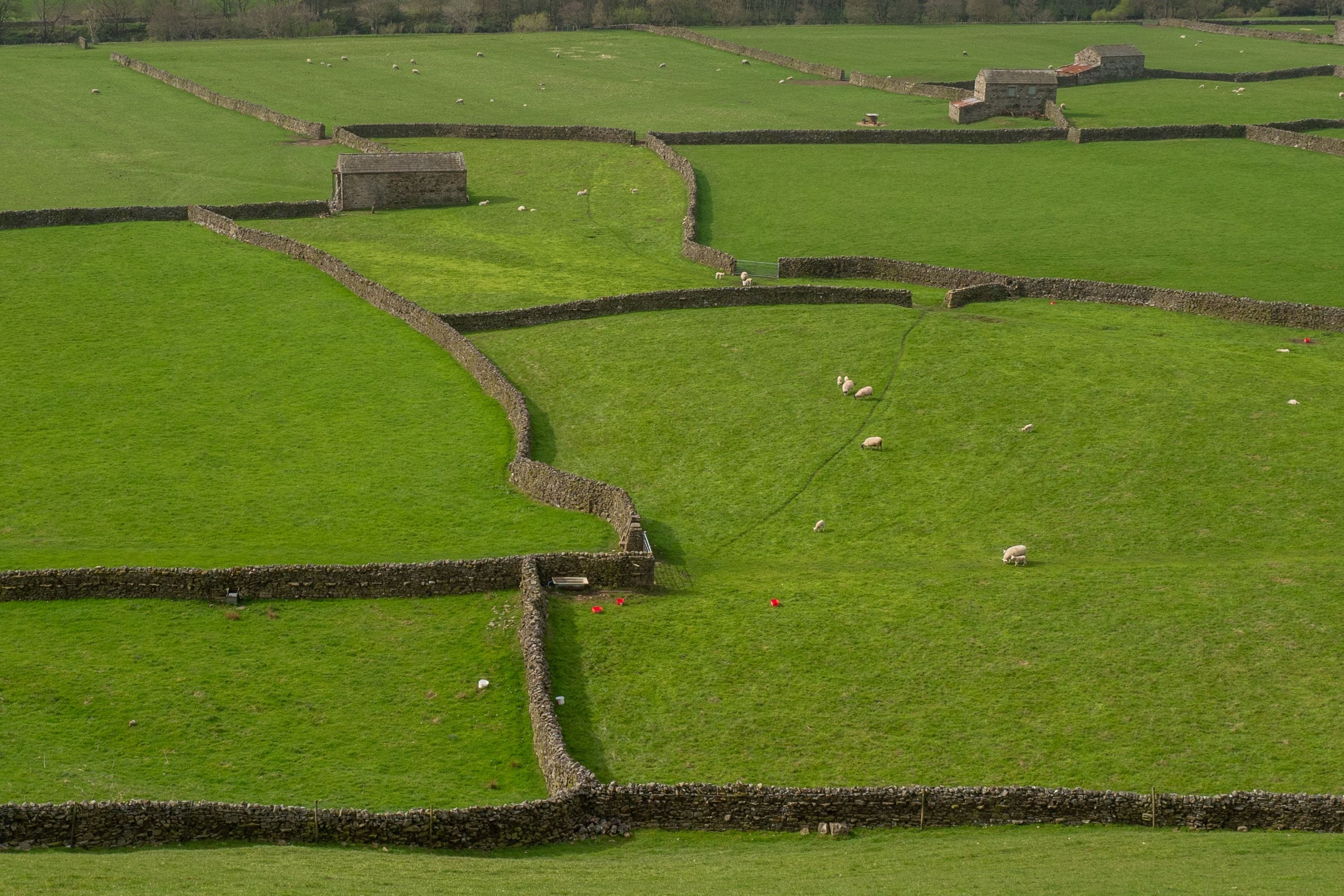
Abraham was told his descendants would inherit a land. For four hundred years in Egypt and forty more in the wilderness, that promise floated without coordinates—real, but unrealized. Now it has coordinates. Now it has surveyors. Now it has a name on every parcel.
The precision of these chapters is itself a theological statement: God’s promises are specific enough to have a deed.
Today we see that the God who makes sweeping covenant promises is also the God who shows up in the legal particulars—that faithfulness is not a vague spiritual atmosphere but an inheritance measured and recorded and given.
A Note Before You Read
Today’s five chapters are geographic boundary descriptions—the ancient equivalent of county survey records. They are not narrative. They are not meant to be read the way you read Rahab’s confession or Caleb’s request. They are meant to be scanned the way you might scan a legal document: not every word, but aware that every word matters to someone.
Here is what to notice as you read:
The Daughter Who Asked — In Joshua 15:18-19, a woman named Achsah rides up on a donkey and asks her father Caleb for springs of water to go with the land she’s been given. He gives her the upper and the lower springs. It is a small moment. It is also a portrait of a daughter who knew her father well enough to ask—and who understood that land without water is land that cannot flourish. She received the inheritance, but she knew what would make it fruitful. A father generous enough to give more than the minimum. Scan for it.
The Sluggish Tribes — By chapter 18, seven tribes still haven’t received their allotments—not because the land wasn’t ready, but because they hadn’t moved toward it. Joshua asks them: “How long will you neglect to go and possess the land that the LORD, the God of your ancestors, has given you?” (18:3). The land was given. The going was theirs to do.
The Lots Cast Before the LORD — The allotments in chapter 18 onward are determined by lot, cast before God at the tent of meeting in Shiloh (18:6, 8, 10). The point is not randomness—it is that no tribe received its portion by political maneuvering or favoritism. Each received what God gave, witnessed and uncontested.
The promise was not general. It was particular enough to be measured, recorded, and assigned.
The Map
Today is the day to use the Joshua map. Every tribe named in these chapters is located on it. Scan the chapters, find the names you recognize, and let the map show you where Israel is settling. The land is taking shape.
See the Joshua Map here.
For Those Who Find Lists Difficult
If you have a type of mind that glazes at genealogies and boundary markers—you are in good company, and you are not failing the study by finding this section challenging. Here is what matters:
God knew every name in these chapters. He knew which family would draw which lot. He knew which springs Achsah would ask for. He knew which seven tribes would need to be prodded to claim what they’d already been given.
He keeps track of the particulars because the particulars are where people actually live.
For those who belong to God through Christ, the promise of inheritance runs through a different set of coordinates—not a survey of Judean hill country, but a place prepared, a kingdom that cannot be shaken, a name written and held. The inheritance is no less specific. It is no less given. And the One who holds it keeps better records than any ancient surveyor.
Journaling/Prayer: Is there some act of obedience—a calling, a next step, a movement you know you should make—that you have been slow to move toward, like the seven tribes who hadn’t yet gone to claim what was already theirs?
It’s worth sitting with that. The land in Joshua didn’t evaporate while the tribes delayed—God’s faithfulness held it. But there is something lost in the delaying, something that requires eventually getting up and going. If there’s movement you’ve been putting off, this is a quiet place to name it.
Action / Attitude for Today
Scan these five chapters today. You don’t have to read every name. Move through them the way you might move through a document that matters but doesn’t need to be memorized—aware that it’s real, that it’s specific, that something is being recorded.
If you are in a season where God’s promises feel like they’re still floating without coordinates—real but unrealized—receive today’s chapters as evidence of what God eventually does with promises. He gives them specific ground. He draws the lines. He records the deed.
If you’re in a season where something good has been given to you and you haven’t moved toward it yet, let Joshua 18:3 sit quietly: “How long will you neglect to go and possess the land?” Not as a rebuke—as an invitation.
If today you can’t do either of those things—if the lists feel like too much and the spiritual application feels out of reach—then take only the small moment: a daughter on a donkey, asking her father for springs. “Give me also springs of water.” He gave her the upper and the lower. God is not stingy with what His children ask.
Say this prayer, as much of it as is true for you today: “Lord, Your promises are more specific than I usually let myself believe. You keep better records than I do. Where I have been slow to move toward what You’ve given—show me. Where I am still waiting for coordinates—help me trust that You have them. Amen.”
The God who recorded every boundary line in Joshua still keeps track of the particulars of your life. He always has.

The Bible for the Broken is published by Aurion Press LLC. © Aurion Press LLC. All rights reserved.